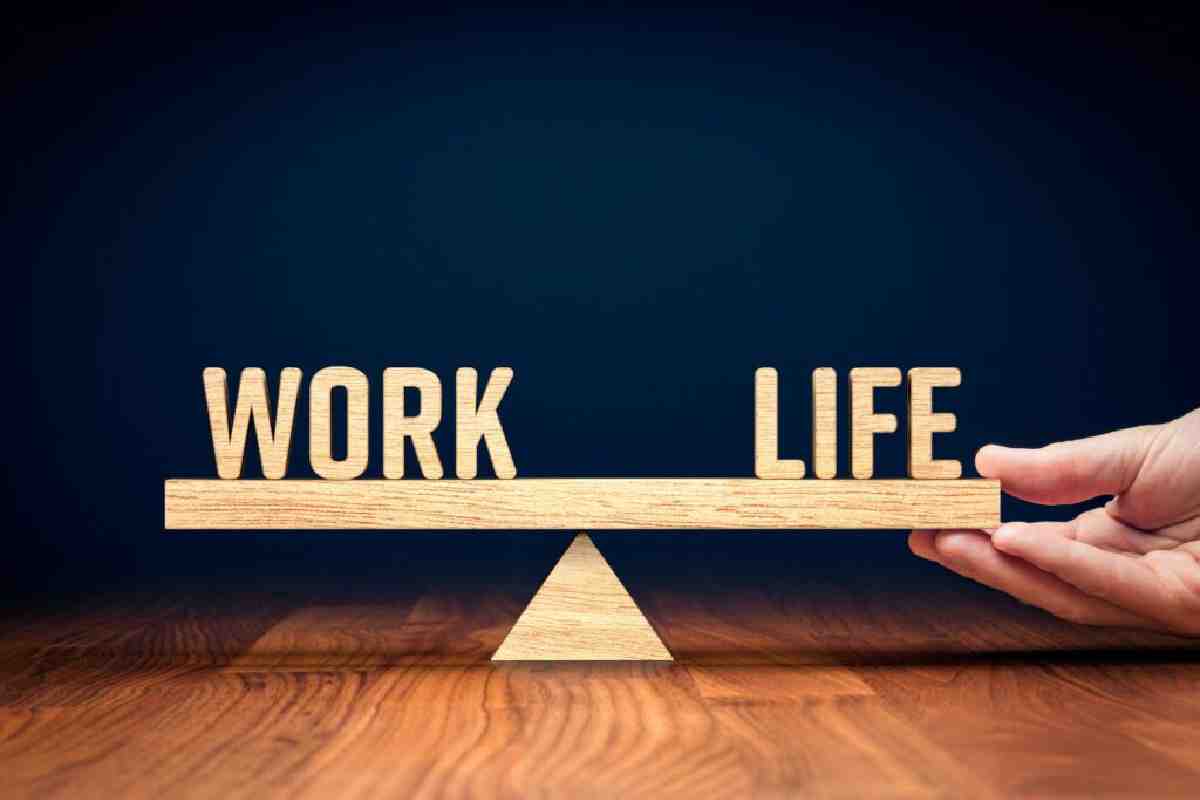
A Positive Work-life Balance refers to the ability to maintain professional productivity while preserving mental health, family time, and personal growth. According to global labor studies, countries that prioritize balance show higher productivity and employee satisfaction rates.
Research from the OECD Better Life Index shows that work-life balance is strongly connected to well-being and economic performance.
Table of Contents
Introduction
Maintaining professional productivity and personal well-being hinges on how positive and robust the work-life balance is. In this incredibly fast-paced world, the need to establish the balance has become even more urgent as it is increasingly easy for work to take up most of our waking time. This piece outlines specific measures to create flexible work-life balance. Stay tuned!
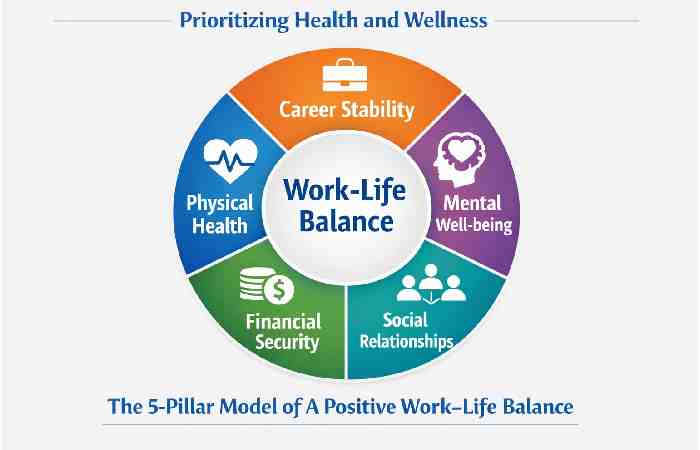
The 5-Pillar Model of A Positive Work-life Balance
Global Trends Shaping A Positive Work-life Balance
Key Global Trends
| Trend | Global Impact |
| Remote Work | 58% of knowledge workers prefer hybrid |
| 4-Day Work Week Trials | Growing in EU & Australia |
| Digital Detox Policies | Adopted by large corporations |
| Flexible Scheduling | Standard in tech & service sectors |
| Mental Health Programs | Expanded post-2020 globally |
These trends show that A Positive Work-life Balance is becoming a strategic priority worldwide.
Understanding Your Priorities
This step is very personal as it often differs from one to another. Ask what is the most meaningful for you. While some may prioritize forgospecting their personal objectives, family time or leisure, others may center their work-life balancing objectives around their professional targets. After you have grasped your priorities, it becomes even simpler to focus your resources and time on what is most valuable.
It comes to your attention that you could great more value and of course focus on what is most essential your work by placing some boundaries It’s really okay for your psychological and overall health to keep work’s influence of your after work time to a little or nothing.
Priority Mapping Framework
Personal vs Professional Priority Model
| Category | High Focus Example | Balance Strategy |
| Career Growth | Promotions, certifications | Structured time blocks |
| Family | Evening time, weekends | Non-negotiable boundaries |
| Health | Exercise, sleep | Scheduled routines |
| Personal Development | Reading, hobbies | Weekly dedicated hours |
This helps align your goals with a sustainable structure.
Achieving Flexibility in Your Work
There are many ways to be flexible with your job to keep a healthy balance in your life. For someone working as a roofer in Salt Lake City, this can be negotiating to start time to leave and be with the family for dinner in the evenings. For other jobs, this could be working from home on Mondays and Fridays.
There are a number of technologies in the form of programs and applications which help in completing tasks which increases efficiency and effectiveness. This means that there will be more time on your schedule for activities which are outside of work. This can help in separating personal time to your family and your job.
Work Flexibility Across Top 5 Countries
Flexibility & Work Culture Comparison
| Country | Avg Weekly Hours | Remote Work Adoption | Work-Life Ranking |
| USA | 38–40 | High | Moderate |
| Germany | 34–36 | Medium | High |
| Australia | 36–38 | High | High |
| Japan | 40+ | Low–Medium | Low–Moderate |
| Canada | 35–38 | High | High |
Countries with shorter average workweeks report stronger A Positive Work-life Balance outcomes.
Managing Time Efficiently
Spend Less Time on the Job Having a good grasp on time management can help in keeping a balance in personal and professional life. This can be done by planning your activities for the week. Allocate times in your schedule for work, family time, personal time, and activities.
Practicing job and home delegation can help in managing time. This means that you do not have to do everything by yourself; this can help in reducing the amount of work you have to do and focus on the the activities that you like the most.
Time Allocation Model for A Positive Work-life Balance
Work-Life Distribution Model
| Activity | Ideal Allocation |
| Work | 40% |
| Sleep | 30% |
| Family/Social | 15% |
| Health & Fitness | 10% |
| Personal Growth | 5% |
Quick Tips:
- Use digital calendars
- Batch similar tasks
- Avoid after-hours email checks
- Set fixed shutdown time
Prioritizing Health and Wellness

Your health should always be a priority. No amount of success at work can compensate for poor health. Regular exercise, a balanced diet, and adequate sleep are fundamental. These not only improve your physical health but also enhance mental clarity and emotional stability, contributing to better performance at work.
Moreover, take time to relax and recharge. This can be through hobbies, meditation, or simply spending time with loved ones. Remember that taking breaks is not a luxury, but a necessity for long-term productivity and happiness.
Resources: Harvard Business Review – Work-Life Balance Research & Insights
https://hbr.org/topic/work-life-balance
Finding Support and Community
Don’t underestimate the value of a supportive network. This could include family, friends, mentors, or professional networks. These people can offer advice, share experiences, and provide emotional support when work or life becomes overwhelming.
Engaging in community activities can also offer a sense of belonging and perspective. It reminds us that there’s more to life than work and helps in maintaining a well-rounded lifestyle.
Social Support & Productivity Data
Impact of Support Networks
| Support Type | Productivity Increase |
| Strong Family Support | +21% |
| Workplace Mentorship | +18% |
| Peer Collaboration | +16% |
| Community Engagement | +12% |
Support systems significantly strengthen A Positive Work-life Balance sustainability.
Country Comparison – Cost of Living vs Work Hours
5 Countries – Cost Index & Work Hours
| Country | Avg Monthly Living Cost (USD) | Avg Weekly Hours | Online Productivity Apps Popular |
| USA | $2,500–$3,500 | 38–40 | Notion, Asana |
| Germany | $2,000–$2,800 | 34–36 | Trello, Slack |
| Australia | $2,200–$3,200 | 36–38 | Monday.com |
| Japan | $1,800–$2,500 | 40+ | Todoist |
| Canada | $2,000–$3,000 | 35–38 | ClickUp |
Higher costs and longer hours often correlate with greater work-life stress.
Conclusion
A Positive Work-life Balance is not a luxury—it is a measurable, strategic advantage. Countries and companies that prioritize flexible work, health programs, and time efficiency consistently show better productivity and employee satisfaction.
Achieving balance requires clarity, boundaries, structured time management, and strong support systems. While economic and cultural factors vary globally, the principles remain universal: protect your time, prioritize your health, and align work with your long-term well-being.
Balance is not static—it evolves as your life changes. The goal is not perfection, but sustainability.
